Saturday, May 12, 2018

Friday, May 4, 2018
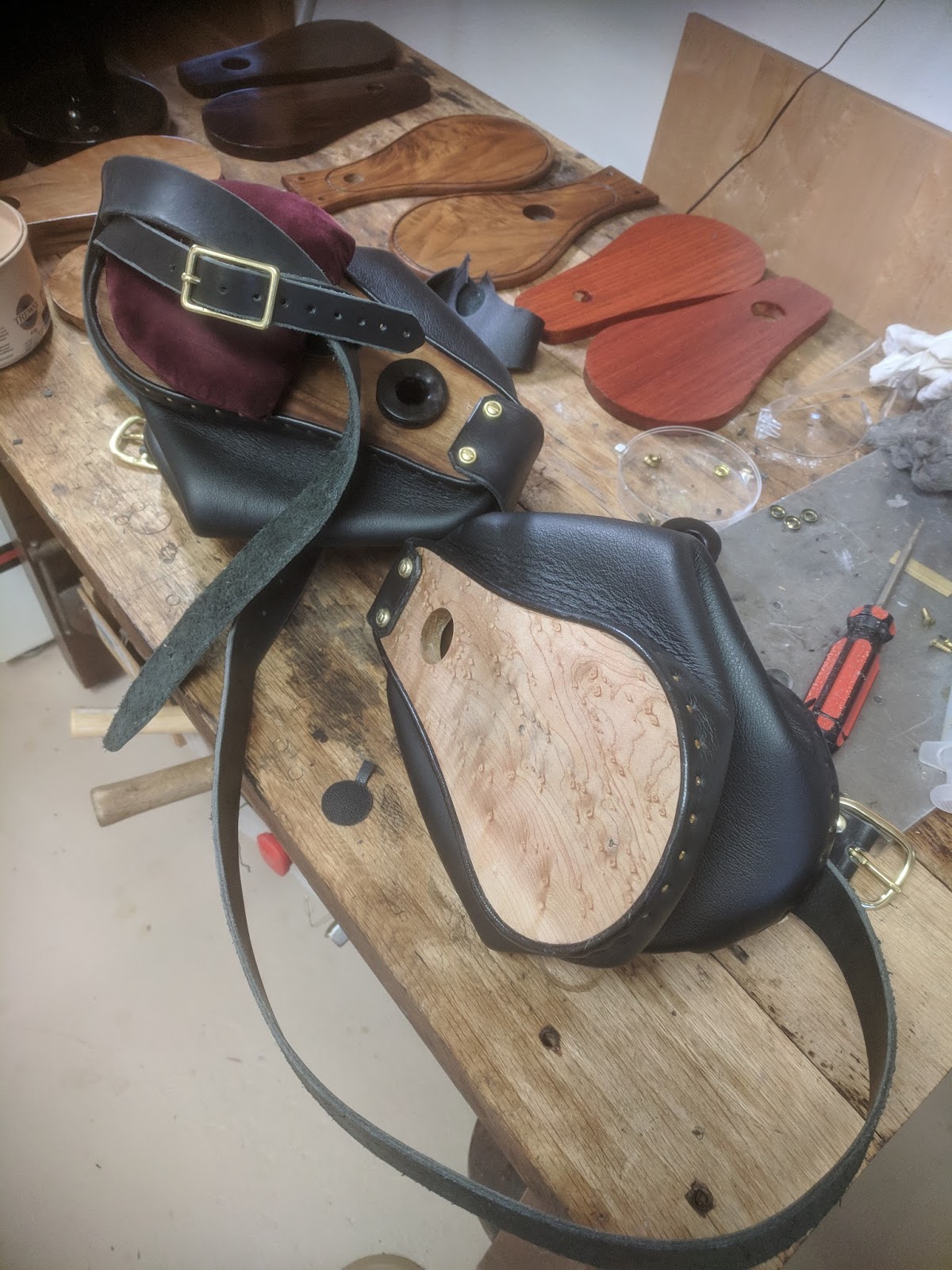
Since I am now making uilleann pipes full time, I have set up a new web site, and social media pages. I am now taking orders for uilleann pipes. This includes any set configurations from concert-pitch practice sets on up to full sets, complete with drones and regulators.
The new web site is at dirkmewes.com
You can also follow me on Facebook at "Dirk Mewes Uilleann Pipes"
and Instagram at https://www.instagram.com/mewesdirk/
Friday, April 6, 2018


Thursday, March 15, 2018



Monday, January 29, 2018
Well, there hasn't been a lot of posting on this blog, but there's a lot more that is actually going-on.
Here's a list of some up-coming events, and a bit of rehashing what happened in 2017:
1. This coming March 2, 2018, I will be performing Shawn Davey's composition, "The Brendan Voyage," on uilleann pipes with the Denver Philharmonic Orchestra. I have been working hard on preparations for this, and I am really excited about it. Here's their site, with the link to get tickets: https://denverphilharmonic.org/upcoming-concert-march-2-2018/
2. That same weekend, Irish piper Blackie O'Connell will be in town, and my friend Pete Strickler has arranged for him to host some workshops for our local uilleann pipers on March 4 or March 5. There will also be a dinner concert at the Burns Pub. If you are interested, check with http://irishhouseconcerts.com/ for details. Check again in a few days if the info isn't there, yet.
3. Our trio Tri 'S Slua will be playing all St. Patrick's Day weekend, on-and-off at the Burns Pub. We will also be playing at another venue in the evening on SPD. I don't have details yet, so check back soon.
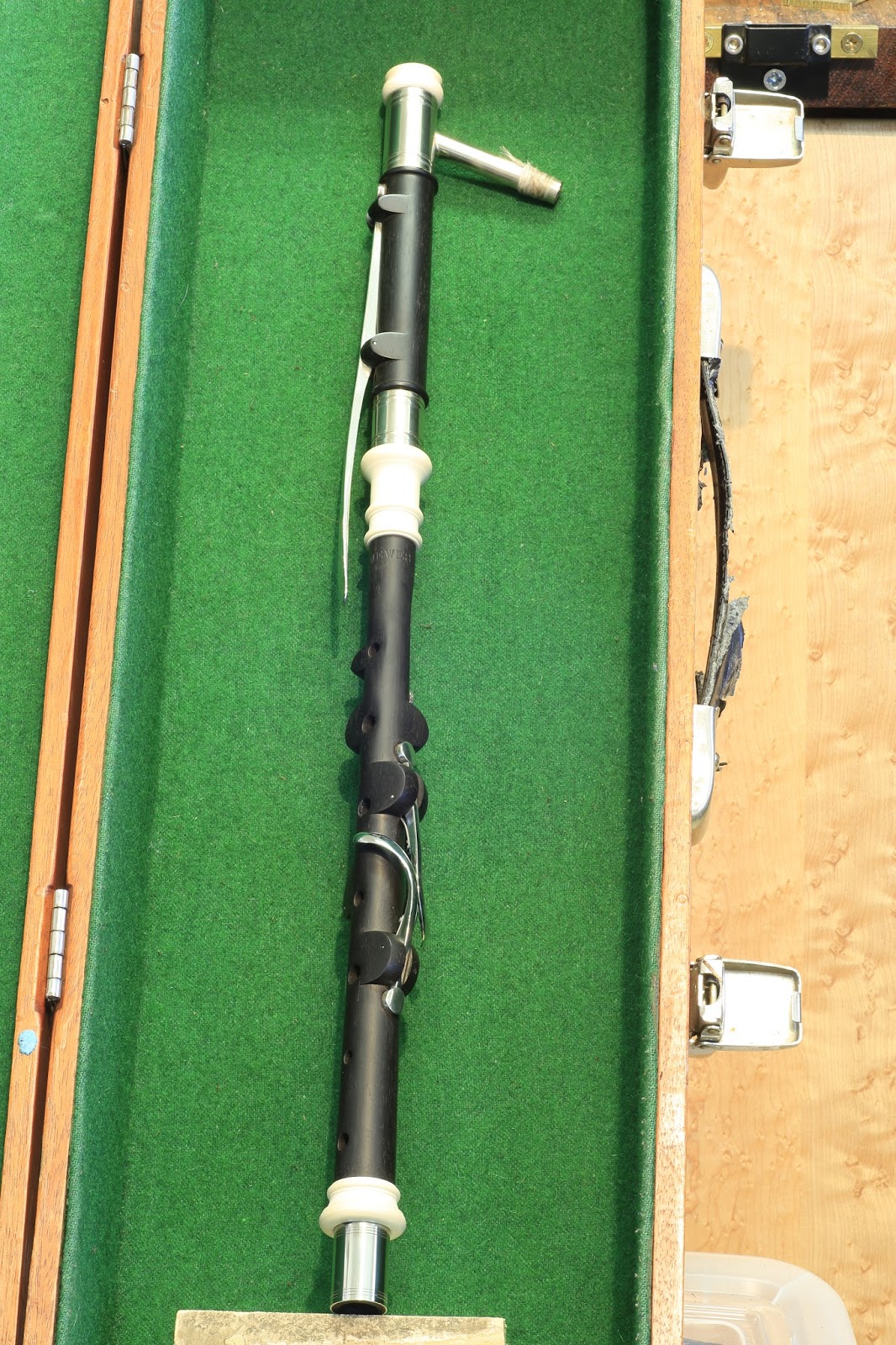
4. Currently, I am working full-time in my shop, making uilleann pipes. There are several practice sets in the making, and I'm also working on a couple pairs of tenor and baritone regulators for customers. I am also slowly making progress developing the final piece to my concert uilleann pipe sets: the bass regulator.
Sunday, February 28, 2016


Friday, March 13, 2015


Saturday, July 20, 2013


Sunday, May 5, 2013
O'Flaherty's Retreat in October
Hello Folks,
I have been very busy in the shop this spring, and I will have some new photos to post, soon.
Also, in October I will be teaching reed-making at the O'Flaherty's retreat in Waxahachie, Texas. Here is some info on the retreat:
I have been very busy in the shop this spring, and I will have some new photos to post, soon.
Also, in October I will be teaching reed-making at the O'Flaherty's retreat in Waxahachie, Texas. Here is some info on the retreat:
------------------------------------------------------------------------------------------------------------
2013 O’Flaherty Irish Music Retreat Announced
If you love learning and playing traditional Irish music and spending three days in a comfortable, scenic setting being saturated with great teaching and incredible performances sounds like a good idea, you might be interested in attending the 10th annual O’Flaherty Irish Music Retreat that will be held October 25-27, 2013 at the Lakeview Camp and Conference Center in Waxahachie, Texas, about 30 minutes south of Dallas.
An exceptional lineup of instructors will teach including some of the finest musicians/instructors in the tradition, including Myron Bretholz – Bodhran; Pat Broaders – Bouzouki; Patty Furlong – Button Accordion (B/C & C#/D); Florence Fahy – Anglo Concertina; Brendan Mulvihill – Fiddle; Fergal Scahill – Fiddle; Liz Knowles – Fiddle; Patrick Ourceau – Fiddle; Laura Flanagan and Chris Buckley – Irish Fiddle Fundamentals; John Skelton – Flute; Josh Dukes – Guitar (DADGAD); Jeff Moore – Irish Guitar Fundamentals; Eileen Gannon – Harp; Rebekah Passmore – Irish Harp Fundamentals ; Marla Fibish – Mandolin; Jimmy Keane – Piano Accordion; Cathie Ryan – Singing; Enda Scahill – Tenor Banjo; Jonathan Milton – Irish Tinwhistle/Flute Fundamentals; and Kierann O’Hare – Uilleann Pipes.
In addition to the regular classes, there will be enrichment classes and workshops that address music history, learning by ear, reed making, Gaelic speaking and singing, ceili dancing, music theory, advanced techniques, Irish myths and folklore, session etiquette and more.
The retreat will officially begin on Thursday night, October 24th, with a “meet & greet” BBQ. Classes start Friday morning and continue through Sunday late afternoon. Each evening there will be concerts by instructors and mini-concerts during meals with a “farewell” concert on Sunday evening. On the Saturday night program, there will be a “Texas Tune & Song Tussle” which features friendly competition among student ensembles that form at the retreat vying for “O’Diddley Awards.” Sessions will be plentiful and organized by levels with some instructor-led and others not.
A variety of lodging options on campus will be available from Thursday evening through Sunday night including lodge rooms, bunkhouses (dorm beds), and RV sites. Meals will be offered Thursday dinner through Monday breakfast. The retreat will offer a shuttle service to and from the Dallas/Fort Worth Airport for $15 per trip per person at select times.
Tuition is $225 and just $135 for youth ages 11 to 18. Tuition covers up to nine 90-minute core classes, three one-hour enrichment classes and three 90-minute workshops. Meals, lodging and shuttle service may be reserved separately. A limited number of scholarships are available for those requiring financial assistance.
If you’re interested, visit the retreat’s website at http://www.oflahertyretreat.org or call the retreat office at (972) 798-7890 or email info@oflahertyretreat.org. Online registration begins May 4th at 9 a.m. Because there are caps on class sizes, early enrollment is recommended.
The O’Flaherty Irish Music Retreat is produced by the Traditional Irish Music Education Society (TIMES), a 501 (c)(3) organization based in Richardson, Texas. In addition to the retreat, TIMES also organizes the O’Flaherty Irish Music Youth Camp for children ages 5-17, the North Texas School of Irish Music, the TIMES Trad Camp and other Irish music education programs.
Friday, June 29, 2012
Thanks to everyone who attended the reed-making workshop. The Santa Fe weather was humbling, which was good for the sake of learning.
Also, these bellows were completed for Laurent, who now owns the set of ebony drones as well:


Monday, April 23, 2012
New drones are born.
These were tied-in for the first time this weekend. I have been working on them a long time...
I think the new cane reeds are sounding pretty good, and the set is air-tight. So it won't be long before their new owner will be playing them.


Sunday, July 24, 2011
Stitched Bellows
There was a bit of a slow-down of prototype work in the shop after the three chanters were completed. As a result, I spent more time with the family... In the last few weeks, I have been slowly learning to make stitched bellows. Fortunately, I have had an excellent guide. Mr. DM Quinn wrote a very helpful article about making stitched bellows, and I followed it as closely as I could. Now my first attempt is complete, and it's time to post some pictures.


Thursday, March 31, 2011
Maple Chanter
Hooray, The maple prototype chanter is complete! This chanter is the one I like best, right now. Here is a photo:


Friday, March 25, 2011
More Keys
Now, the maple prototype chanter has keys mounted and playing. It still needs some adjustment to get the


third-octave D in tune, but it's close. Then, it needs the mounts, cap and some polishing...


Tuesday, March 22, 2011
Chanter Keys
Lately, I have been learning to make keys for my chanters. For these first few, I have been using a lot of methods and examples learned mostly from the writings and the classes I took from David Quinn and Bill Haneman. The pictures show various stages of fitting the keys to the chanters...


Friday, March 4, 2011
Measuring Uilleann Pipe Chanter Bores
... with a DRO, brass rods, and Delrin probe tips.
Recently, I set up a digital readout (DRO) to help me measure and profile the bores of my prototype chanters. This is a very slight modification to the measurement method that was described to me by the master pipe-maker DM Quinn. He actually was describing the method used by his partner Benedict Koehler to affix Delrin probe tips to brass rods. The chanter rests upside down in a cradle while being measured. He gently lowers each into the bore, using the weight of the rod to keep the pressure consistent between measurements. Then, the depth is measured against a ruler. At first, when measuring, I would lay the brass rod next to a steel rule with .5 mm graduations, after carefully determining the depth.

 With my new method, the ruler is the DRO. The method goes faster for me, and it also seems to produce more accurate results, for me. The brass rod is lowered, and rests against the angle bracket affixed to the DRO slider. The DRO is zeroed, and then raised along with the brass rod until the tip of the probe rests on the bell of the chanter. At this point, the numbers on the display should represent a fairly accurate depth that I then punch into the spreadsheet program running on the laptop. Then I set up the next increment probe, and take more measurements. I have made probes in increments of .05 mm up to about 6 mm, and then in increments of .1 mm larger than that. When using all the probes, it makes for a long measurement job, even with the DRO.
Recently, I set up a digital readout (DRO) to help me measure and profile the bores of my prototype chanters. This is a very slight modification to the measurement method that was described to me by the master pipe-maker DM Quinn. He actually was describing the method used by his partner Benedict Koehler to affix Delrin probe tips to brass rods. The chanter rests upside down in a cradle while being measured. He gently lowers each into the bore, using the weight of the rod to keep the pressure consistent between measurements. Then, the depth is measured against a ruler. At first, when measuring, I would lay the brass rod next to a steel rule with .5 mm graduations, after carefully determining the depth.


Friday, December 10, 2010
The Chanter


As of yesterday, I now have a chanter that can be played. Like my first chanter, this one does not yet have keys. This second prototype chanter will have three keys, when completed. This chanter is made from Indian rosewood.
Included is a picture of the tone-hole setup, with the first tonehole, and another of the chanter in its current state of development. The chanter still needs fine tuning, some mounts, a windcap, keys, ferrules, and finish work.
Friday, October 1, 2010
Chanter Work.
It has been a long time since I updated the blog. Basically, I decided to put-off working with regulator keys in favor of working with chanter and regulator bores. This included refining my techniques for measuring bores, studying bores, making reamers, and matching reamers to the target bores. This study in boring has paid off well. I now am able to produce reamers that more-closely match the bore they should produce, and I can make them more quickly and efficiently than I used to.
Now that the first set of probes is done, and I can measure the chanters under development, and I have a spreadsheet that can compare the reamers I make to the bore I make, the time has come to rework the chanter design. I am starting this development phase now, an attempt to develop a concert-pitch chanter. Like many modern makers, I am aiming for a design that is based on the work of Leo Rowsome. I will start by making the best copy of a Leo Rowsome chanter that I can, based on some published measurements of bore and tone hole data.
Now that the first set of probes is done, and I can measure the chanters under development, and I have a spreadsheet that can compare the reamers I make to the bore I make, the time has come to rework the chanter design. I am starting this development phase now, an attempt to develop a concert-pitch chanter. Like many modern makers, I am aiming for a design that is based on the work of Leo Rowsome. I will start by making the best copy of a Leo Rowsome chanter that I can, based on some published measurements of bore and tone hole data.
Thursday, July 22, 2010
“The novice, noting a fine agreement among his observations, is often deceived into supposing he has attained an accuracy far greater than the measurements really justify. The surest way to obtain enlightenment is to remeasure the same quantity by an entirely different method. The lack of agreement that is apt to result is often a disagreeable surprise and gives one, as nothing else can, a just estimate of how grudgingly Nature permits the real truth to be extracted. A close agreement in the results of measurements made by two or three entirely different methods gives, on the other hand, the highest assurance that a real precision has been attained.”
From Methods of measuring electrical resistance by Edwin Fitch Northrup (1912)
http://books.google.com/books?id=z3lKAAAAMAAJ
This quote is pertinent to my current project. I am making more than 140 little Delrin probes that will allow me to measure and profile the conical bores in the uilleann pipe chanters and regulators. Essentially, when constructed and used properly, they should allow me to measure what I make, and to study the works of other makers, especially those makers who are no longer with us. It's a tiring project, laden with meticulous measurements with calipers and micrometers, and very careful work on the metal lathe. However, I am already learning a great deal from this exercise.
-Dirk
In other news, I'm thinking of ditching Blogger. The features are very limited. I can't upload video or Mp3 recordings, and the editor stinks. for instance, it doesn't have a simple underline for text formatting (without using wiki-style commands.) I had to go out of my way to enable copy/paste. So, I'll probably host a real site, and run my own blog engine on it, and a Wiki... Coming soon!
From Methods of measuring electrical resistance by Edwin Fitch Northrup (1912)
http://books.google.com/books?id=z3lKAAAAMAAJ
This quote is pertinent to my current project. I am making more than 140 little Delrin probes that will allow me to measure and profile the conical bores in the uilleann pipe chanters and regulators. Essentially, when constructed and used properly, they should allow me to measure what I make, and to study the works of other makers, especially those makers who are no longer with us. It's a tiring project, laden with meticulous measurements with calipers and micrometers, and very careful work on the metal lathe. However, I am already learning a great deal from this exercise.
-Dirk
In other news, I'm thinking of ditching Blogger. The features are very limited. I can't upload video or Mp3 recordings, and the editor stinks. for instance, it doesn't have a simple underline for text formatting (without using wiki-style commands.) I had to go out of my way to enable copy/paste. So, I'll probably host a real site, and run my own blog engine on it, and a Wiki... Coming soon!


Subscribe to:
Posts (Atom)